For dark mode users,
Hello, reader! Today, we are covering: Index Zoom In Gold Medalist An San Faces Misogynistic Online Abuse After Olympic Win This Week's Recommendations Take Off & Run-Off (국가대표 1&2) Don't forget to leave your feedback below!
Gold Medalist An San Faces Misogynistic Online Abuse After Olympic Win Writer: Haram Lee Editor: Regine Armann, Aleya Sharif Editor-in-Chief: Fred McNulty Researcher: Yul Jun, Heejin Ahn
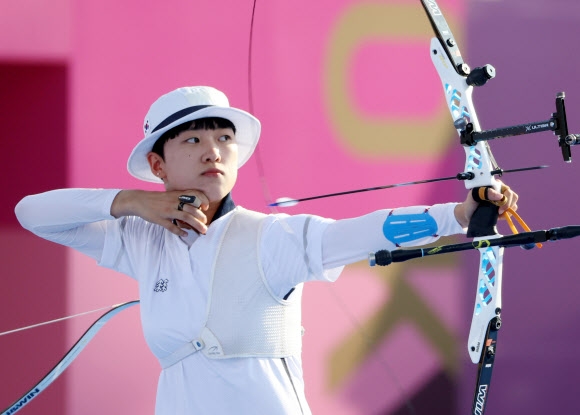
On July 24th, An San (안산), a South Korean archery athlete, won the gold medal at the Tokyo 2020 Olympic Games. She is the first Korean archer to win three medals in a single Olympics, and it was only a matter of time until she gained nationwide attention and recognition. Shortly after she had won her first medal, however, some people started to point out that An San is a feminist based on her appearance, background, and past deeds. The fact that she has been attending a women's university, has short hair, and allegedly used certain “feminist” terms on social media enraged some users so much that they felt the need to attack her. As this incident has garnered international attention, many observers outside of Korea were surprised to learn that being accused of being a feminist was enough to invite a severe level of online bullying and harassment. Initially, An herself did not make personal comments on this matter. Later on, she stated that she was aware of the issue but did not care as she had to focus on the games. Who Criticized An San and Why?
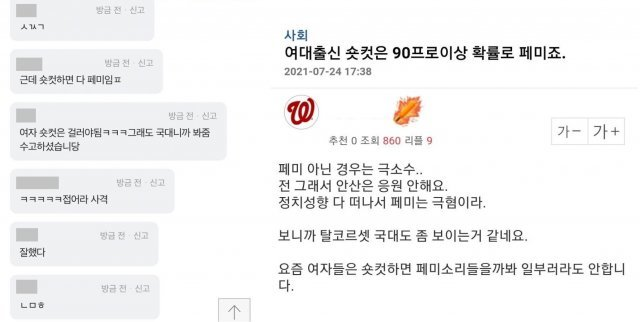
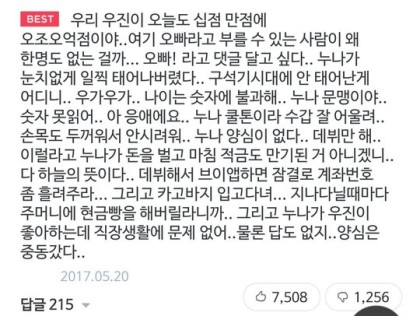
Some reactions regarding An San and feminists from online communities An San would then go on to win gold medals in the mixed and the women’s team finals during the Tokyo Olympic Games), which put her even more in the spotlight. Under a recent post on her Instagram, some users left comments asking “Why do you cut your hair short?”, to which An San responded that she simply finds short hair comfortable. Nevertheless, some users of infamous male-centric online communities insisted that An San must be a feminist, because she has short hair, attends a women’s university, listens to k-pop girl group Mamamoo (마마무), comes from the Jeolla-do region, and because she has used the expression “ohjo-ohuk (오조오억)” and “woong-aeng-woong (웅앵웅)” in old Instagram posts. Many men in Korea say that ohjo-ohuk and woong-aeng-woong as “misandrist” expressions used by radical feminists. The term ohjo-ohuk loosely implies “a lot” or “billions and billions”, and literally translated as “five point five trillion”. Initially, this expression was used to describe something as being innumerable in a humorous manner, similar to the meme, “I love you 3000,” from the film Avengers: Endgame. For example, “My love Woojin, you were ohjo-ohuk out of 10 at today’s performance!”
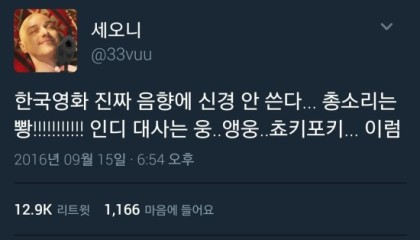
Source: 오조오억 - 나무위키 (namu.wiki) A k-pop fan enthusiastically showing her support for her favorite artist Woo Jin during the Produce 101 audition program in 2017. Here, she uses the word ohjo-ohuk to emphasize her emotion. However, as time passed by, some have argued that radical feminists use the term to explicitly belittle men by mocking “the number of their sperms being five point five trillion”. Woong-aeng-woong is an online slang that implies the faulty sound effects of movies. It started when someone used this expression on Twitter. The original form was “웅앵웅 쵸키포키” (woong-aeng-woong chokie pokie). This expression went viral even more after Thomas McDonell, an American actor, tweeted “웅앵웅 초키포키” on his Twitter account, which was broadcasted on Korean mainstream news and gained public attention.
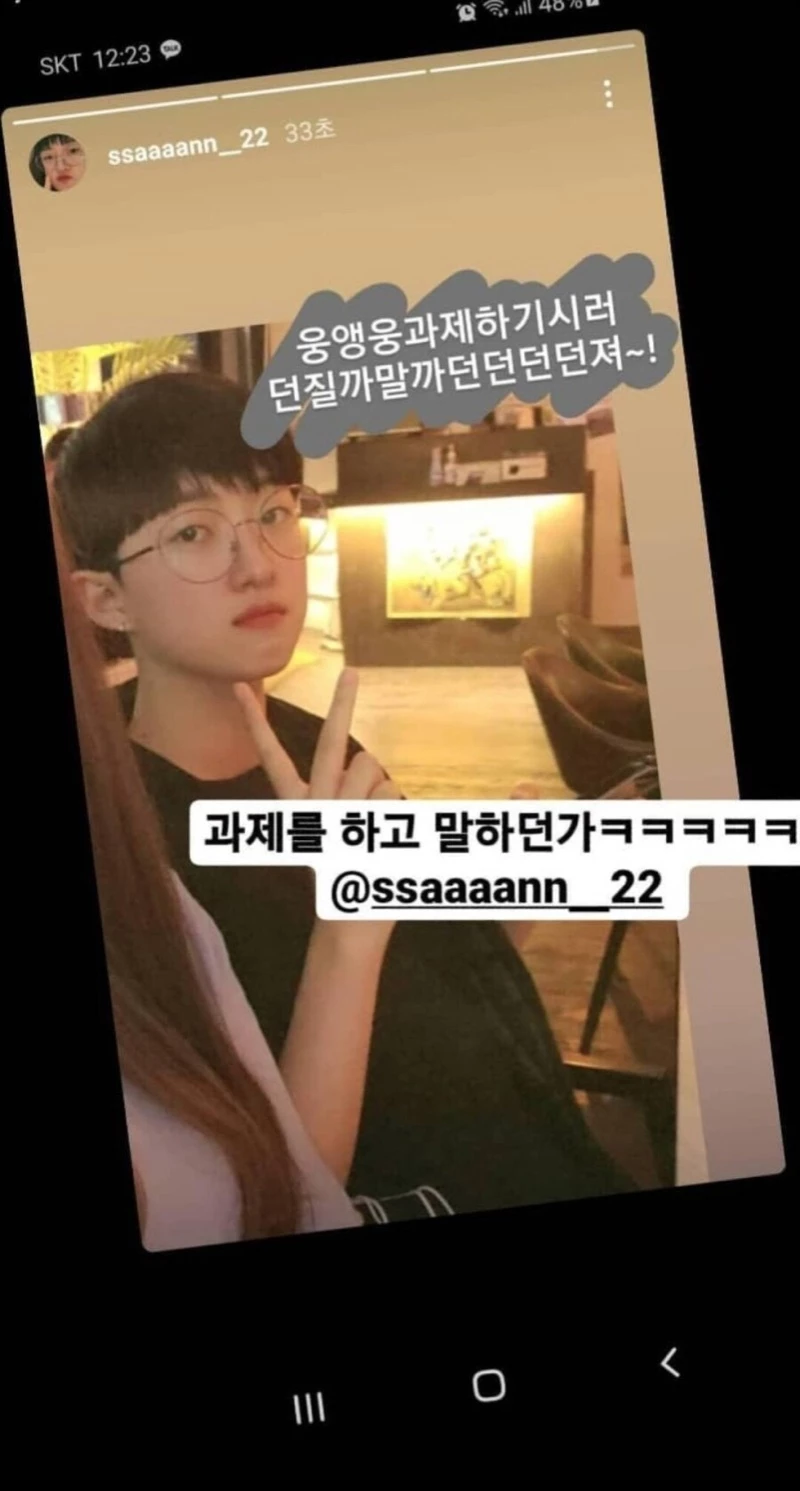
Translation: Korean movies don’t care about sound effects… Guns sound like “BBWANG!!!!!”, but actors’ lines sound like “woong.. aengwoong.. chokie pokie... Since then, 웅앵웅 has been used to describe unclear speech or mumbling as well as someone speaking without logical context or meaning. While some argue that the term is currently used to make fun of men lacking in logic and trying to win debates by mumbling, the original creator of the meme clarified that “the term is not misandrist”. Kakao and GS25 were previously accused of using these terms during their advertisements, as mentioned in the following article. As such expressions have already been publicly denounced, online communities mostly used by men have considered them “unacceptable” and have criticized An San for her use of these terms. For example, An San once used the word woong-aeng-woong on her Instagram story.
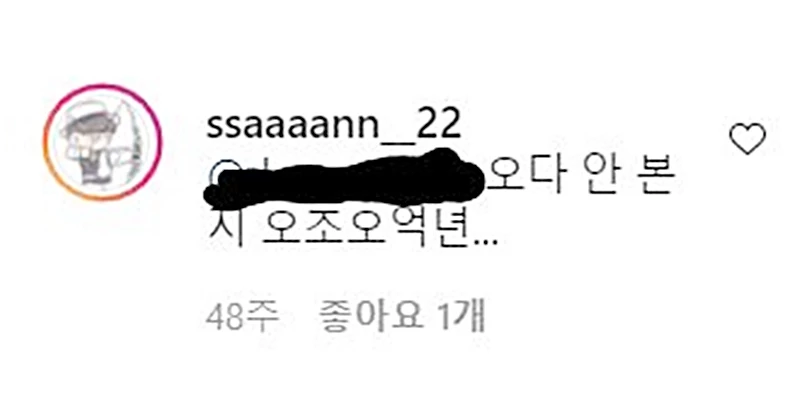
Translation: Her Friend (highlighted in white): “Talk after you’re done with your assignment lmao” @ssaaaann_22 An San (highlighted in gray) : “Woong-aeng-woong I don’t wanna. Might as well just throw it away~!” An San also previously used the term ohjo-ohuk in one of her comments on Instagram.
Translation: It has been ohjo-ohuk years since I’ve seen (the user whose name has been censored out of a concern for their privacy)... An San has not made any official statement about her past posts. To name a few online communities where the attacks towards An San took place, FM Korea (에펨코리아) and Ilbe (일베) were among them. Due to a large number of users of these sites, the specific age group of those who attack An San cannot be determined.
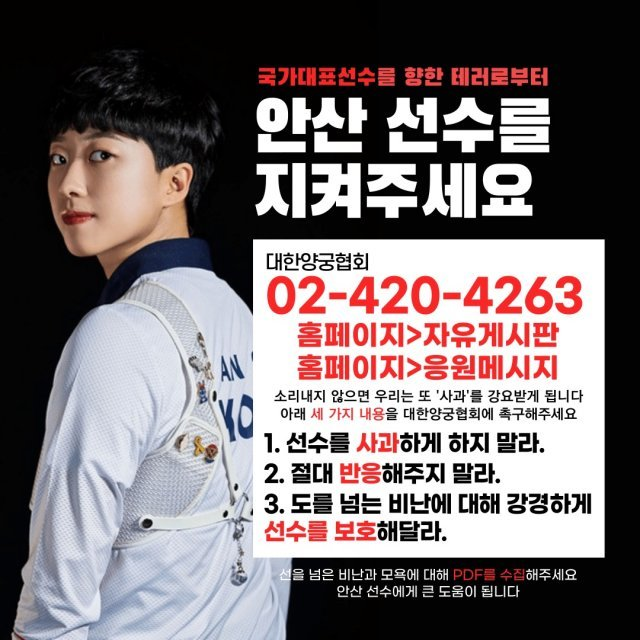
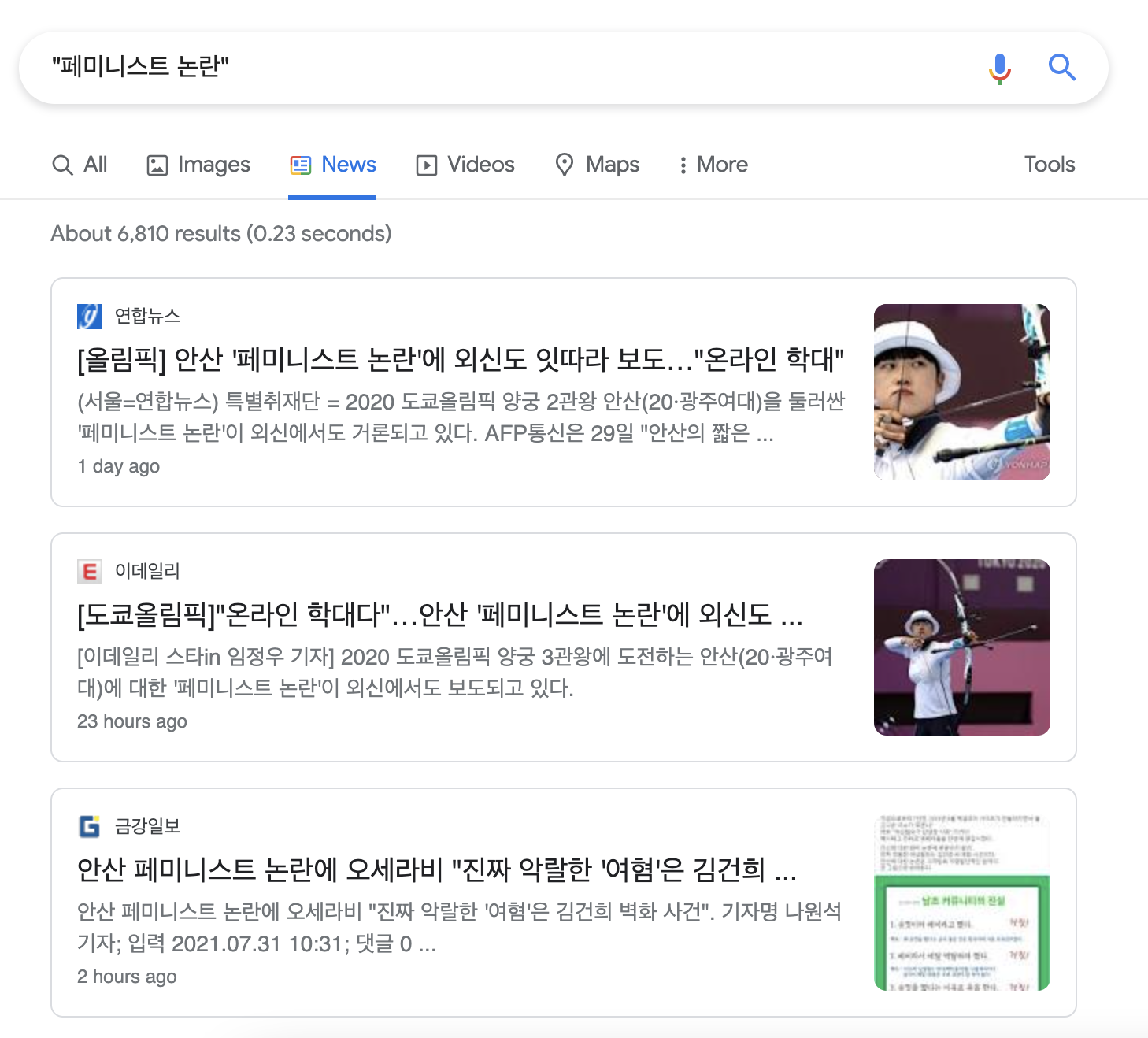
People are calling to protect An San from online abuse How the Korean Media Reported on This Matter 1) Selective Hyperoveraction and Choice of Sensational Words From July 24th to 31st, about 7,000 articles that incorporated the term “feminist controversy” appeared on Google News.
Financial News (Korean link), a Korean news agency, reported that the attacks on An San by male Internet users, some even telling her to turn in her Olympic medals because she is a feminist, have in turn angered many female Internet users, who then urged the Korea Archery Association to protect An San. The comments left under this article, which was entitled as a reaction to the title of an article that read “An San’s controversy strikes a conflict between men and women… ’take away the medal’ vs. ‘protect the player”, were mixed. One user wrote (Korean link), “There are only a few people who think like this. Why do you make it sound as if it’s our general opinion?” Another commented, “Did you really think returning the medal was a possibility, seeing how you used ‘vs’ in your title?” 2) Absence of Journalism Ethics Kookmin News has called the way the Korean media have reported on this issue “problematic”. They state that while “many media outlets are describing this happening as a “feminist upheaval” or a “short hair controversy,” such expressions are wrong to use because what happened to An San constitutes cyberbullying and a crime, not a controversy. → The Gender Equality Team of the National Union of Media workers released a statement on July 29th that “some posts by Internet communities are far from the truth and represent hatred and abuse of women.” The code of journalistic ethics stipulates that even statements by official organizations or public figures shall not be incorporated in reporting if they promote hate and discrimination. The team further states that articles promoting random discussions from online communities for view counts represent a violation of human rights and journalistic ethical standards. In stark contrast to the Korean media, international news agencies like BBC, NYT, and CNA used terms like “sexist abuse”, “online abuse,” and “anti-feminism”, in their articles on the attacks on An San. 💬South Korea fans support Olympic gold medallist An San after online hate and sexist abuse because of her hairstyle (thesun.co.uk) 💬An San Won Her Third Gold Medal. Detractors Are Criticizing Her Haircut. - The New York Times (nytimes.com) 3) Public Reaction The majority of the Korean public seems to be supportive of An San and condemning those who abuse the athlete. As for politicians, however, their opinions seem to be more divided. Lee Joon-seok, the leader of the opposition People Power Party stated (Korean link) that “I’ve been busy with the presidential race but the Justice Party has asked me to give a statement. While other parties are busy with their preparation for the presidential race, the Justice Party is searching through some online communities and asking others to speak up about it as well. Nothing good will come from the Justice Party doing this. I support An San and each of the Korean athletes.” Lee is known for his anti-feminist views, and some have interpreted his statement as him being able to bend to popular opinions of An San while also downplaying the commonplace nature of misogyny in Korean culture. Baek Hye-ryon, a commissioner of the Democratic Party of Korea, mentioned (Korean link) that she was frustrated to see An San facing abuse along the lines of “short hair stands for feminism,” “women’s universities represent feminism,” and by her having to prove her personal beliefs to everyone. She also added that it is a shame that the foreign press is reporting on An San receiving online abuse and not acknowledging the hard work and commitments of Korean athletes participating in the Olympics. Also, Woo Won-sik, a politician from the same party, mentioned on his social media, “judging people based on their appearance and background and criticizing them without checking the truth is the pure definition of ignorance and closely resembles a hate crime.” Shim Sang-jung of the Justice Party insisted that she is "fully supporting An San and standing by her short-cut hairstyle. I urge the Korean Sport & Olympic Committee (대한체육회) to respond to unfair abuse done to the players with no tolerance.” Ryu Hyo-Jung from the same party shared a picture of her old short-cut hairstyle on Facebook and commented, “There is no such thing as a ‘feminist look.’ Whether it’s short hair or dyed hair, a feminist is a woman who chooses her own way.” Moreover, people have started to show support for An San. Her supporters have urged the Korea Archery Association to protect her from online abuse. In addition, the Korean hashtag #women_shortcut_campaign has been trending on Twitter, with users sharing the photographs of their own hairstyle to show support for An and other women with short hair. As a response, the Korea Archery Association asked the public to refrain from commenting on the discussion over An’s haircut and stated, “We will do everything to support our athlete.”
This Week's Recommendations Take Off & Run-Off (국가대표 1&2, 2009) The movie Take Off follows the story of five players with different backgrounds and personalities coming together to form a team. In order to host the Winter Olympics, the South Korean national ski jumping team was urgently formed. Take Off was released in 2009 and attracted 8 million viewers. Thanks to the success of the movie, Run-off (the sequel to Take Off) was released in 2016. It also follows the story of people with different personalities becoming a team. Unlike the previous work, the main characters are an all-women ice hockey team. You can watch the movies on Watcha.
💚 Support us! 💚
|