#Low birth rate in Korea #사유리 #vocabulary #4B For dark mode users,
Hello, reader! Today, we are covering: Index Zoom In Low Birth Rate in Korea and How to Solve It
Today's Vocabulary 4B (Four Bs) This Week's Recommendations Familyhood (굿바이 싱글) Don't forget to leave your feedback below!
Low Birth Rate in Korea and How to Solve It Writer: Sunny Um Senior Editor: Regine Armann Editor-in-Chief: Fred McNulty Researcher: Yul Jun Illustrator: Ah-young Kim
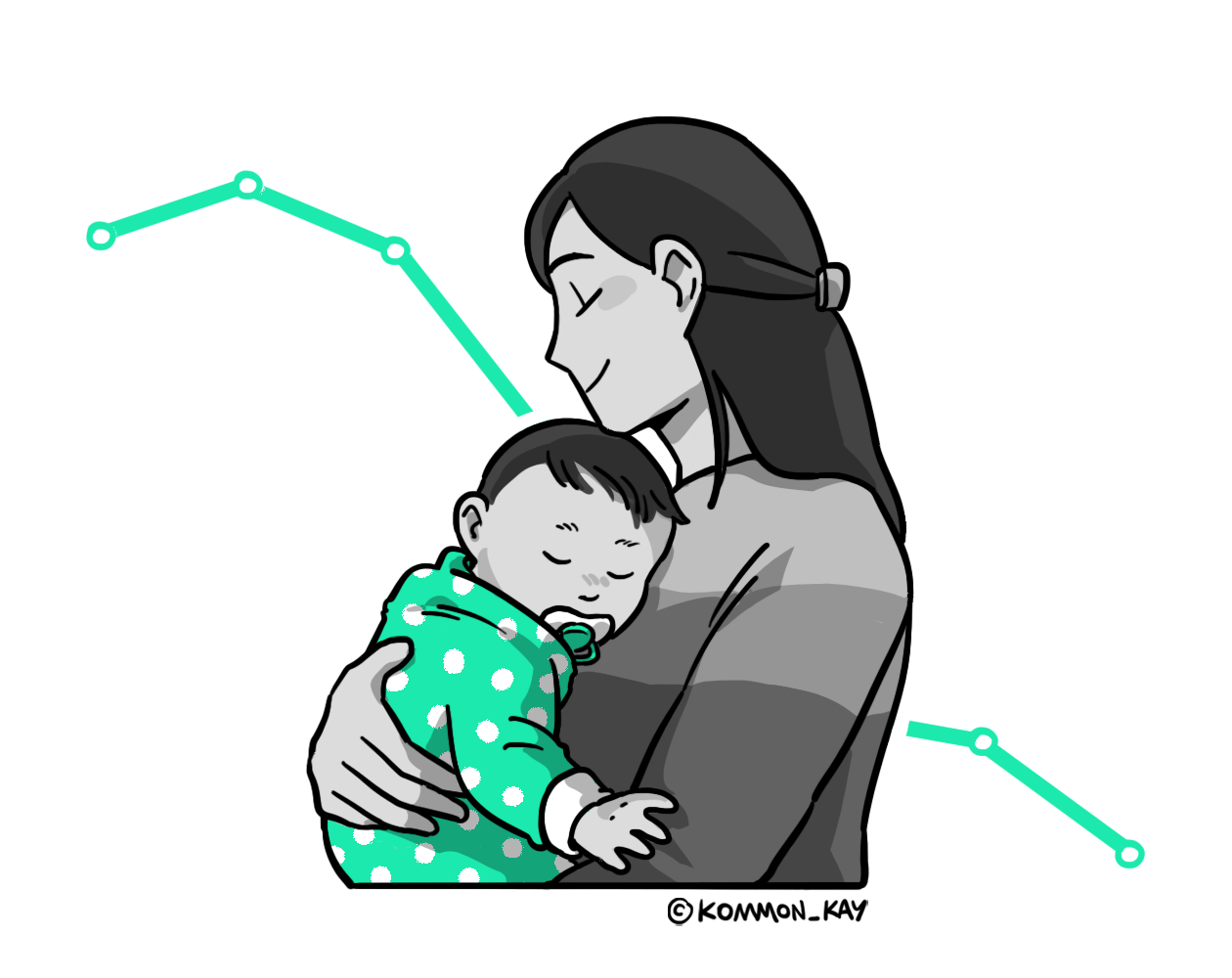
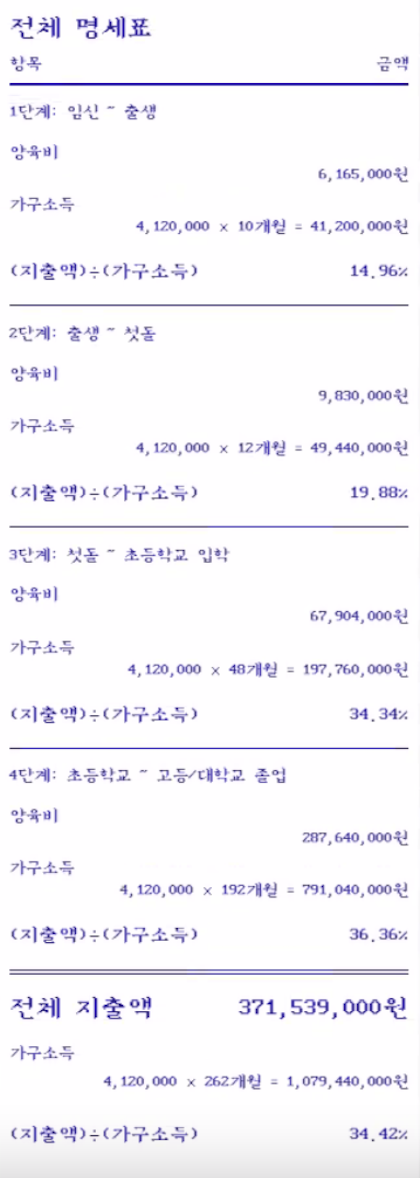
[Illustration by Ah-young Kim] Last November, Sayuri Fujita, a Japanese media personality based in Korea, announced on Instagram that she became a mother to a son. Sayuri wrote that she would like to devote her life to her baby boy and that she thanks everyone who has supported her. This post, however, triggered an angry response from some Koreans who were appalled by the fact that Sayuri was unmarried and had received a donation from an overseas sperm bank in order to give birth. Unmarried, Single Mother Sayuri was never married and plans not to ever get married. She calls herself a “voluntarily unmarried mother (자발적 미혼모),” a term for women who decide to give birth to a child or adopt one without having a spouse. During an interview with KBS News in the same month, Sayuri said that she preferred to receive a donation from a sperm bank instead of getting married to someone she does not love just to have a child of her own. Sayuri’s determination to stand confident and strong as an unmarried mother did not stop there. She recently announced joining the weekly television show The Return of Superman (슈퍼맨이 돌아왔다), where celebrity fathers take care of their children alone for 48 hours while their wives take a break. As Sayuri doesn’t have a spouse, she plans to present her life as a single mother to the viewers, taking care of her baby and working at the same time. The show’s production team announced that they started to film Sayuri’s episodes in late March. Some voiced their concerns on Sayuri’s episodes being broadcast on a national television show, however, because Sayuri is a single mom and the baby is the result of a sperm donation. For example, the Korea Association of Church Communication said in a press release that airing episodes of Sayuri’s family, which is not in the same line with what the association considers as a “healthy structure of a family,” will be promoting the lifestyles (Korean link) of such unmarried mothers. The group also did not approve of the fact that Sayuri received the sperm donation from a Japanese sperm bank. In Korea, sperm donations are not permitted by law. The association said that children are supposed to be “produced based on marriage between a man and a woman” and that airing Sayuri’s episodes will provide “biased and distorted ideas of family structures.” Moreover, a public petition has been filed with the Blue House to cancel Sayuri’s episodes on The Return of Superman and to stop accepting “abnormal families” as “normal.” The petition (Korean link) has been endorsed by over 3,900 users so far. A Solution to the Low Birth Rate? On the other hand, there are people who suggest that Sayuri’s family can provide an answer to the low birth rate problem in Korea. This is because having a child while staying single has not been considered an available option for women so far. According to a 2018 report of the Organization for Economic Co-operation and Development, only 1.9 percent of newborns are born outside of marriage in Korea — which is the lowest percentage out of the 44 countries studied. Also, Korea has the highest abortion rate (Korean link) — over 3,000 cases per day — among OECD member states. An official of the Presidential Committee on Ageing Society and Population Policy told Hankook Ilbo, “If there is any support the government can provide for all births [regardless of family forms], we would have to consider them (Korean link), too.” The official also said that the matter of births outside of marriage should be more openly “discussed in the public.” Low Birth Rate in Korea Korea has recorded plummeting birth rates for many years, but the record of 2020 hit rock bottom. Last year, the total fertility rate was 0.84, which is a historically low number. The total number of deaths also exceeded (Korean link) the number of newborns for the first time. An official from the Korean Statistics explained that the total fertility rate dropped as fewer people got married due to the spread of COVID-19. Some experts say that Korea’s low and still dropping birth rate should be understood as a natural process, with individuals on a low income “not choosing” to have babies because of the financial burden. Min Sun, a human rights activist working with the non-profit organization Sarangbang (사랑방), said that the tangible and intangible costs of giving birth and looking after children are bigger (Korean link) than not having kids in the current society. “It is not easy to plan for a future under the current living conditions,” she wrote in an article published in the Pressian. “Forming and supporting a family under such conditions is a huge burden on our shoulders. … We are faced with low-waged and unstable labor and cannot buy a house of our own even if we save all money we earn for the rest of our lives. Thus, it is an individuals’ natural choice not to get married or give birth.” Rhyu Si-min, a former politician who served as the Minister of Health and Welfare, also said in a television show that it is every individual’s choice (Korean link) not to have children under “uninhabitable” conditions. Others are concerned over how the continuously low birth rate might negatively impact the country. One of the contributing problems is the diminishing labor power. With fewer newborns every year, the population will shrink and the number of people who are able to work will drop. Similarly, the country’s defense power will be weakened when the number of soldiers drops, and the economy will suffer (Korean link) immensely. Future generations will have to pay more in taxes (Korean link), both for their own retirement and also to support the older generations. This will impose an even bigger burden on the young people’s shoulders. The market size of Korea will become smaller every year with declining numbers of consumers. This could hinder the development of businesses and, on a larger scope, impact the country’s economy. What Makes the Birth Rate So Low Why is the birth rate in Korea so low, then? First, many Koreans think that the cost of having a child is simply overwhelming. Let’s say a married couple in their 20s decides to have a child. They earn two million won per month, which is the national average wage of people in their 20s a month. For example, a 2019 child simulator (Korean link) operated by DongA Ilbo suggests it takes almost 370 million won (assuming that each parent earns the national average wage of people in their 20s — two million won — a month) to support a child until he or she becomes a self-sufficient, independent adult. Many Koreans think that they cannot afford this amount of investment for a child or want to invest in themselves instead.
Second, societal attitudes on parenting are not always warm and inclusive. Mothers are sometimes mocked as “Momchoong,” meaning mother-bug, when they seem to not control their children in public or ask for advantages for their children even if that means compromising other people’s comfort and convenience. Although this may be a satirical nickname to call out bad parents, a significant number of people say that the name itself represents discrimination against mothers. Also, many establishments, such as coffee shops and restaurants, are not allowing parents with children to enter by implementing “no kids zones.” These establishments say that this zone is to keep a “tranquil atmosphere” of the venues by banning children’s entry in the first place. A survey by Embrain showed that over 65 percent of parents with a child or children under 13 have felt nervous if their children would annoy other customers at coffee shops and restaurants. More information about the momchoong and no kids zones can be found in our past newsletter. Last, getting married and giving birth to children seems to have become something that women in Korea would like to avoid. Many women cite the rigidity of gender roles (Korean link) as a major factor. For example, a common complaint involves too much housework. House chores and parenting duties are often responsibilities of the mother of the family, as illustrated by the widely used terms dogbaggasa (독박가사, doing house chores alone) and dogbagyuga (독박육아, taking care of a child alone). Many companies prefer not to hire women who are planning to have children or already have children. This is because they think these mothers would have to excuse themselves from work frequently or take years of paid leave to look after their children. A report by Asia Business Daily says that interviewers in fact give penalties (Korean link) to female job applicants who write “married” on their resumes. A lot of women who have had children find themselves on gyeonglyeogdanjeol (경력단절, a career break due to pregnancy or childbirth). According to a survey by Worknet, only 33 percent of women (Korean link) who had to leave their jobs due to childbirth could get their jobs back. The survey explained that the rest could either not find a new job or had to work at temporary positions that are not even covered by the employment insurance. This is because their previous workplaces do not want them back as they are not obliged to do so, or they cannot find a new job after years of taking care of their offspring. Rocky Road to Raise the Birth Rate Since his inauguration in 2017, President Moon Jae-in has introduced several plans to increase Korea’s birth rate and make Korean society a better place for future generations. Some of the government’s plans are to provide subsidies for people who are not eligible for regular wages while on parental leave, offer medical services for free for newborns, expand support for babysitters, promote paid parental leave for spouses in all companies, give more subsidies to single parents, and reform institutions to reduce discrimination against births outside of marriage. The newly elected mayors of Seoul and Busan have also pledged to guarantee social and financial support for marriage and childcare. For example, Seoul Mayor Oh Se-hoon vowed to expand the availability (Korean link) of shared children’s daycare service centers. Busan Mayor Park Hyung-jun promised to give three million won to parents (Korean link) who welcome their first child, and six million to those who have a second child. However, some people doubt that these government-led birth rate stimulus plans would be very effective. Akom News commented that most of the plans set out by the government are too focused on giving assistance to households that already have children (Korean link), not to people who are either considering or planning to have children. Also, the government’s financial support plans are mostly one-off subsidies that may not have a long-lasting effect on people’s lives. “The real problem with raising the low birth rate, however, is not the number itself,” Eun Seong-ho, director-general of the Presidential Committee on Ageing Society and Population Policy, said at the 2019 International Population Forum. “It’s devising plans to improve the quality of life (Korean link) of our citizens.” Immigration: Another Way? If people in Korea chose to avoid having more children, there is another way to prevent impending disaster: allow more people to become Korean citizens. Doing so would increase the labor force, increase the purchasing power of Korean citizens, and prevent economic calamity. Undertaking the decision to boost immigration would mean a significant rethinking of current policy. According to a 2018 report by Haskew Law, a UK-based immigration firm, South Korea has some of the toughest immigration laws in the world, saying, “to become a Korean citizen is virtually impossible.” Furthermore, this option is not regarded to be a mainstream idea in Korean politics. Neither the ruling Democratic Party (더불어민주당) nor the opposition People Power Party (국민의힘) has seriously considered this as an answer to the birth rate issues.
Today's Vocabulary 4B (Four Bs) Four Bs, or 4B, is short for bihon (비혼, no marriage), biyeon-ae (비연애, no dating), bichulsan (비출산, no childbirth), and biseong-gwangye (비성관계, no sex). The term was first used among feminists who oppose traditionally patriarchal values and concepts. Women who consider themselves 4B have chosen to abstain from these practices. The Korean prefix bi (비) used in the four terms is pronounced the same as the English letter b, hence the acronym. A: B씨는 혼기도 다 찼는데 얼른 시집 가서 애 낳아야지~ B: ^^; 저는 4B 실천 중이에요. A: B, aren’t you supposed to get married before you become too old to have a child? B: *Awkward laugh* I am practicing 4B.This Week's Recommendations Familyhood (굿바이 싱글, 2016) This movie is a comedy-drama film about an actress in her 40s who adopts a teenager’s baby and claims it as her own. The protagonist, Go Joo-yeon, first decides to have a baby of her own in the hope of having someone who will always be on her side. However, Go finds out that she has reached menopause when visiting a clinic. There, she meets Dan-ji, a pregnant teenager, and offers to financially support her until she gives birth and then adopts the baby. Later, Go declares that she is pregnant — a lie
— and that she will live as a single mom. Her announcement gets her a lot of attention from the public, which leads to countless career opportunities. Excited about being in the spotlight, Go starts to forget about Dan-ji. Do you want to know what happens next? Familyhood is available on YouTube Movies & Watcha!
💚 Support us! 💚
|