For dark mode users,
Hello, readers! Today, we are covering: Index Zoom In K-Drama Netflix Syndrome Today's Vocabulary 넷플 (Netpil) This Week's Recommendations All of us are Dead (지금 우리학교는, 2022) Don't forget to leave your feedback below!
K-Drama Netflix Syndrome Writer: Haram Lee, Daeho Park, Loren Sarenas Editor: Sulagna Banerjee Senior Editor: Regine Armann Editor-in-Chief: Fred McNulty Researcher: Yul Jun
Source: Netflix Intro Squid Game (오징어게임), Hellbound (지옥), All of Us Are Dead (지금 우리학교는): Korean dramas are surging in global popularity. Squid Game had topped the global Netflix chart for 53 days, Hellbound for 11, and All of Us Are Dead has been at the top of the chart (Korean link) since its initial release on January 28th. Since Netflix’s market penetration into South Korea, the global audience has been able to access Korean drama content much easier. Netflix has enabled a number of creative writers to have their works presented to the public on their platform. Prior to Netflix, only the works that were approved by major broadcasting companies and investors were aired through those broadcasting companies: KBS, SBS, and MBC. Anything that did not win their favor was turned down. In fact, the original story of Squid Game and its adaptation by director Hwang Dong-hyeok (황동혁) were completed in 2009. Because there was no streaming service like Netflix back then, Hwang originally planned Squid Game to be a 2–3-hour long film. However, Hwang failed to receive adequate investments (Korean link), because Squid Game was perceived as not being suitable for Korean social norms and culture. Netflix opened a door for creators like director Hwang. For any dramas or movies to be created, investments are vital. The investments provided by Netflix have enabled K-Dramas previously shadowed away from the public to be cast into the limelight. Because of the consecutive success of Korean dramas, Netflix’s investments in Korean dramas and movies are expected to rise. From 2015 to 2020, Netflix invested 7 hundred million dollars. But in 2021 alone, Netflix had planned to invest 5 hundred million dollars. The Mechanism Behind the Popularity of K-Dramas One of the main reasons behind the global popularity of K-Dramas is that Korean dramas have successfully addressed social and interpersonal issues that a global audience can relate to. Squid Game, for example, was able to gain global popularity because it addressed the common denominator of the difficulty of people in a capitalistic world. Also, high standards of acting skills have played a significant part, which allows Korean actors and actresses to captivate even non-Korean audiences. Korean actors and actresses are now being globally recognized, with Oh Young-soo (오영수), who appeared in Squid Game, and Yoon Yeo-jeong (윤여정) from Minari (미나리) winning Golden Globes (Korean link) and many others gaining global popularity. Behind the Scenes It has been 4 years since producer Lee Han-bit (이한빛), who was a supporting director of a broadcasting company, passed away after accusing the industry of creating a poor working environment for the broadcasting site staff (Korean link). But the reality of the drama industry exploiting staff has not changed. According to the results of the Drama Staff Labor Survey (드라마 스태프 노동실태 조사) conducted by Democratic Party (더불어민주당) lawmaker Chung Pil-mo’s (정필모 의원) office, three out of 10 broadcast drama staff members who responded to the survey answered that they received wages late or received no wages at all within the past year. 22.1% experienced a delay in wage payments within a year, and 5.2% experienced arrears; 4.8% of the respondents said they experienced both delays and arrears. The Hope Solidarity Union (희망연대노조) also conducted an online survey of 330 drama staff. Most of the staff who responded to the questionnaire said they experienced verbal or physical violence by directors, production companies, and broadcasters at the scene, with 44.8% saying they heard remarks demeaning their personality, followed by abusive language (37.9%), assault (7.9%), and sexual harassment (0.3%). Only 1.8% of the respondents said they had no experience of any kind of human rights violations. Broadcasting workers are also suffering from "continuous labor." When asked about the average daily actual working hours (excluding meal times), four out of 10 people answered: "within 16–18 hours" (37.6%), followed by "within 14–16 hours" (31.5%) and "within 18–20 hours" (15.8%). Of all respondents, 71.2% cited "long-term labor" as the biggest problem in the drama production environment. Lee Han-sol (이한솔), the younger brother of producer Lee Han-bit and director of the Hanbit Media Labor Rights Center, who protects the rights and interests of broadcasters and media industry workers, said that “At the broadcasting workplace, we are now starting to realize that we have to comply with working hour regulations and that staff working hours are often too long. However, there should be a system in place so that we don’t need to rely on individual conscience and choices." Most broadcasting workers have to endure overdue wages, delays, and human rights violations because they are not recognized as workers, making it difficult to be protected by the Labor Standards Act. Only 24.6% of respondents signed proper employment contracts. Of those who did not sign labor contracts, 39.4% (249 people) said they did not ask for labor contracts "because that is common practice at the broadcasting production site," while 31.7% said not signing contracts was "requested by broadcasters or outsourcing producers." For this reason, the broadcasting workers cited "mandatory preparation of standard labor contracts" (66.5%) as the most important policy that the government should implement to improve the drama production environment. Lawmaker Chung Pil-mo remarked, "Although the drama production environment is improving, broadcasting workers are still not legally protected," adding, "Broadcasting workers should be comprehensively recognized as workers under the Labor Standards Act to guarantee their rights." What to Improve Not all K-Dramas have been successful. Some of them were met with harsh criticism and lost their audience after controversies or backlash from the public. Here are some cases: History Distortion Famous for featuring Jisoo (지수) from Blackpink and renowned actor Jung Hae-in (정해인), the JTBC drama Snowdrop (설강화) was met with harsh public criticism (Korean link) for twisting the truth about the democratic civilization movement in the 80s and glorifying North Korean spies and the Korean Central Intelligence Agency (안기부), who have been accused of hurting and killing Korean people demanding democracy and of violating human rights. (👉 KOMMON💌) Also, an SBS series called Chosun Exorcist (조선구마사) went off the air after only two episodes because of its false representation of Korean culture and history, such as using outfits that were not from the actual Joseon era but influenced by Western and Chinese clothes. (👉 KOMMON💌) Actual Joseon-era outfit:
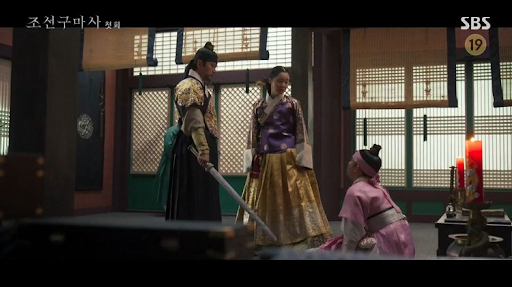
Source: https://namu.wiki/w/%EC%A1%B0%EC%84%A0%EA%B5%AC%EB%A7%88%EC%82%AC/%EB%85%BC%EB%9E%80%20%EB%B0%8F%20%EC%82%AC%EA%B1%B4%20%EC%82%AC%EA%B3%A0/%EA%B3%A0%EC%A6%9D%20%EC%98%A4%EB%A5%98%20%EB%B0%8F%20%EC%97%AD%EC%82%AC%20%EC%99%9C%EA%B3%A1 As portrayed in the drama: Both the woman in the center and the girl on the right are wearing outfits that resemble Chinese clothes.
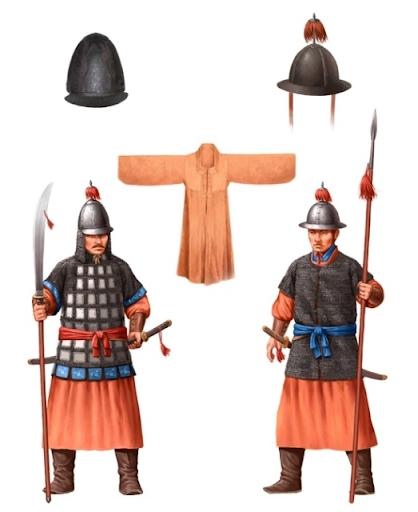
Source: SBS There was a problem with the depiction of the soldiers’ armors as well. This is the proper depiction of the armor worn by soldiers during the Joseon era.
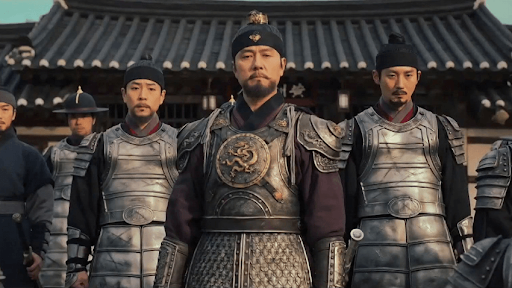
Source: http://www.picturebook-illust.com/san_kr/popup_gallery_viewer.asp?idx=891392&mem_id=xman1717 However, what appeared in the drama (see the image below), was completely different.
Source: SBS Later, it was found that the creators had copied the design of the army of House Lannister in Game of Thrones. Also, it has been pointed out that the plot did not match actual historical events. In the drama, Prince Chungnyeong (충녕대군), also known as King Sejong (세종대왕), treated Western reverends with Chinese food, and maidens wore Chinese-style outfits. Moreover, the act of Taejong of Joseon (태종) slaughtering his people while hallucinating and the descriptions of Prince Prince Yangnyeong (양녕대군) and Chungnyeong (충녕대군) were incorrect (Korean link). All these distortions of history enraged the viewers and even triggered a national petition for the whole series to be stopped. Animal Cruelty While KBS was recently filming The King of Tears, Lee Bangwon (태종 이방원), a horse that was used to film a fall was killed on set. A stuntman was riding the horse and the horse suddenly fell over when, as can be seen in a video of the filming set (Korean link), the crew pulled a rope that one of the horse’s legs was tied to a tree with, thereby limiting the horse’s mobility. When the rope reached its end, the horse flopped in the air and fell straight to the ground while the stuntman fell off the horse. The horse did not get up in the video of the filming set and apparently died of its injuries a week later. Animal rights organizations and the public were enraged after the video was shared online and accused KBS of animal cruelty. Later, KBS made an official apology and said that they would find alternative methods of filming to prevent similar instances. K-Dramas are more than just dramas that are produced in Korea now. As a new mainstream source of global entertainment, calls for the makers of such dramas to be more responsible are rising as well. Accountability extends in front of the cameras too, as audiences are demanding higher standards for the content of dramas as well, since viewers are likely to perceive whatever dramas depict as “the truth”.
Today's Vocabulary 넷플 (Netpil) 넷플 (Netpil) is a shortened form of Netflix. A: 야, 너 넷플 뭐보냐? B: 다 봐. A: Hey, what do you watch on Netpil? B: Everything. This Week's Recommendations
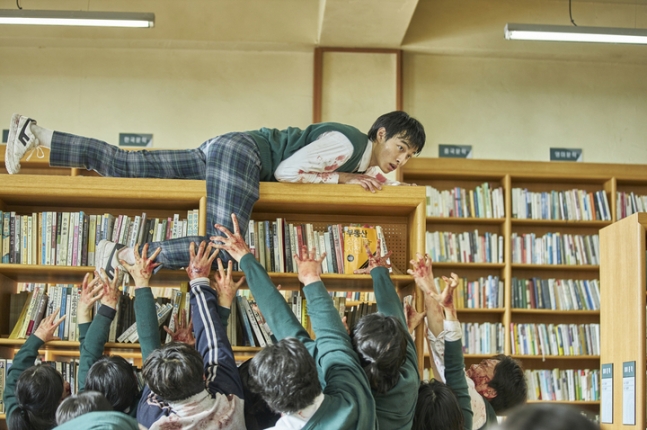
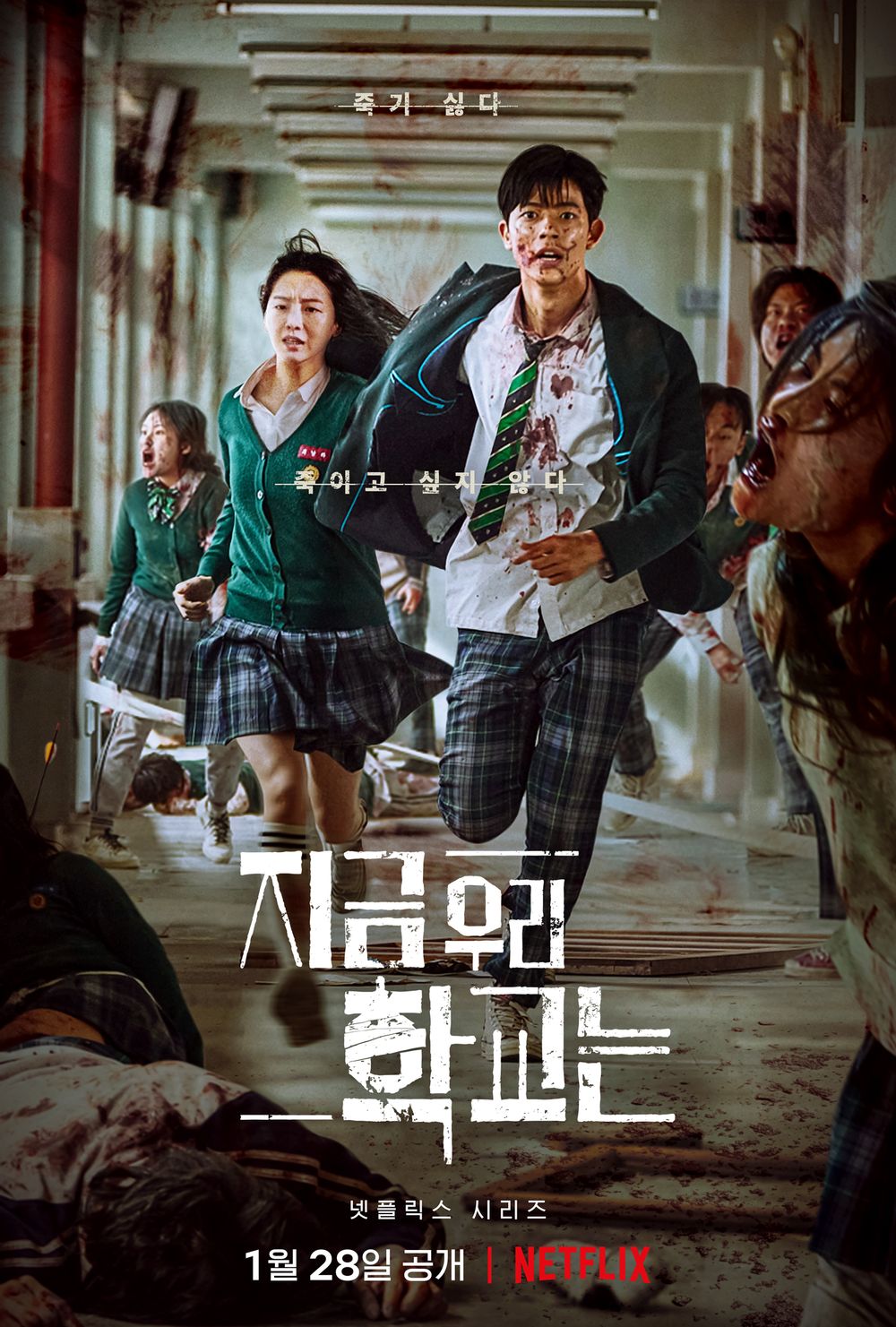
All of us are Dead (지금 우리학교는, 2022) Available on Netflix (12 episodes) The series, based on a comic book, is largely reminiscent of two huge Korean films – Train to Busan (2016) and Alive (2020). The story revolves around high school students’ survival when a zombie apocalypse breaks out in their school after student Hyun-joo gets bitten by a hamster infected by a virus engineered by science teacher Lee Byeong-chan. In response to the emergency, the government imposes martial law in the city of Hyosan, and evacuates the surviving residents. With several students and teachers infected on campus, the uninfected, obviously on the losing end in terms of physical strength, need to find ways to outsmart the zombies while protecting themselves. Will the students get out alive?
💚 Support us! 💚
|