For dark mode users,
Hello, readers! Today, we are covering: Cultural Insight: Virtual characters, real problems Slang: Kwangya (광야) This Week's Recommendations Drama Squid Game (오징어게임) Don't forget to leave your feedback below!
Virtual characters, real problems Writer: Yul Jun, Sol-won Pyeon Editor: Joon-hee Cho Senior Editor: Regine Armann Editor-in-Chief: Fred McNulty Researcher: Yul Jun, Dae-ho Park, Sunny Um Illustrator: Ah-young Kim
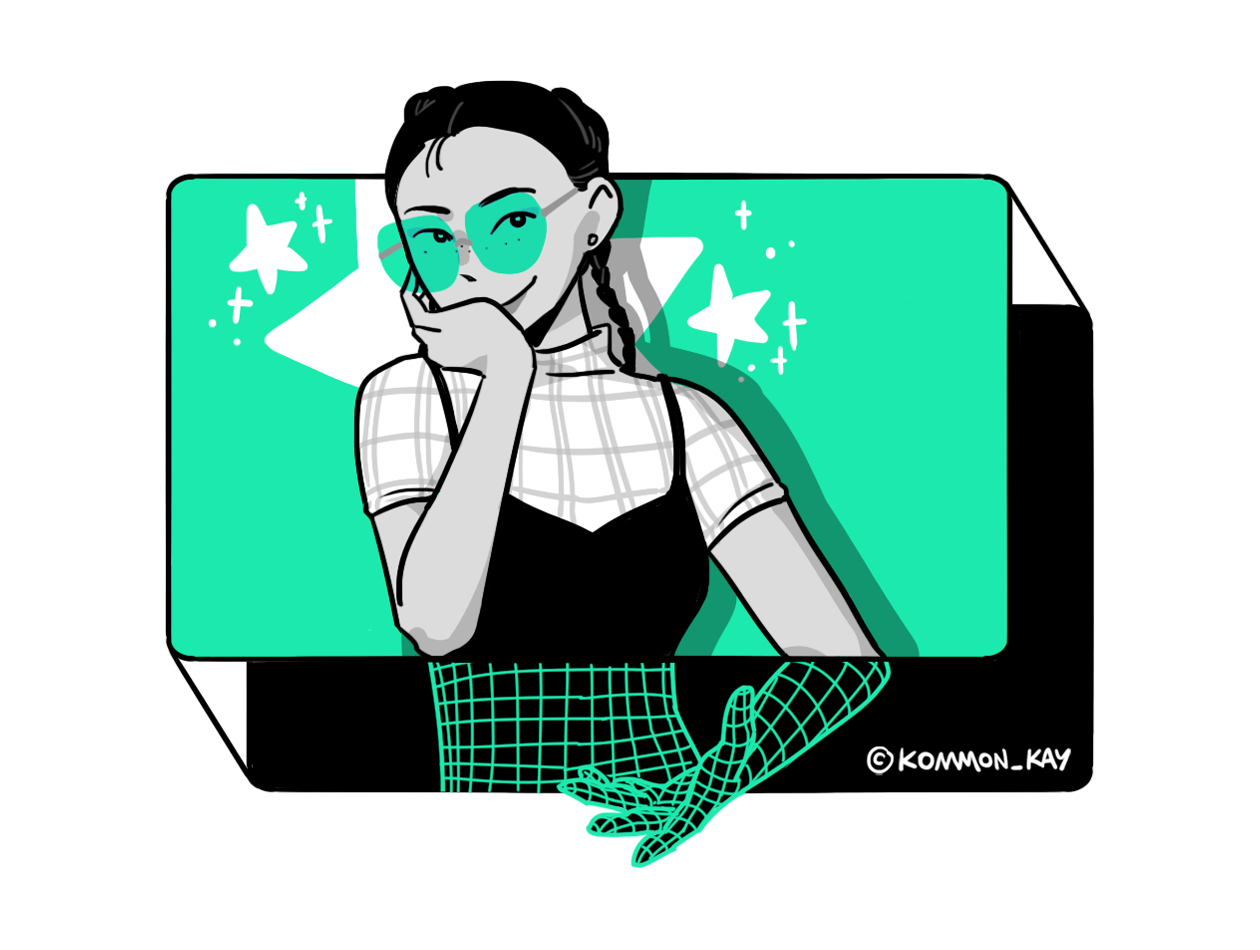
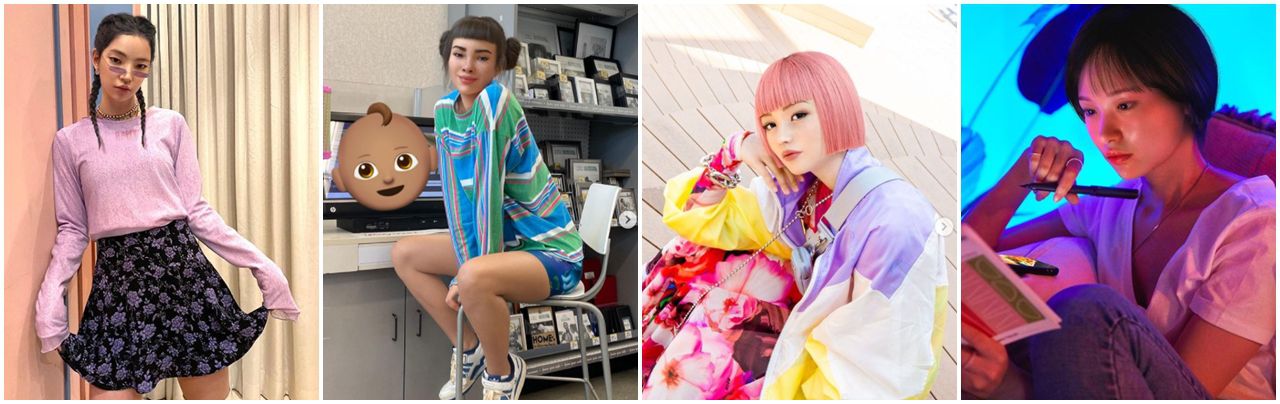
[Illustration by Ah-young Kim] The Story of “B” There is a commercial that “B” often sees on TV these days. In the commercial, a celebrity that “B” has never seen before is dancing in a cool way. “B” was curious who it was, so she looked her up on the Internet. But she was really surprised when she found out that this celebrity is not a person, but a virtual model! Her name is Rozy and she was created with 3D modeling and AI! 😱 She also has her own Instagram account!
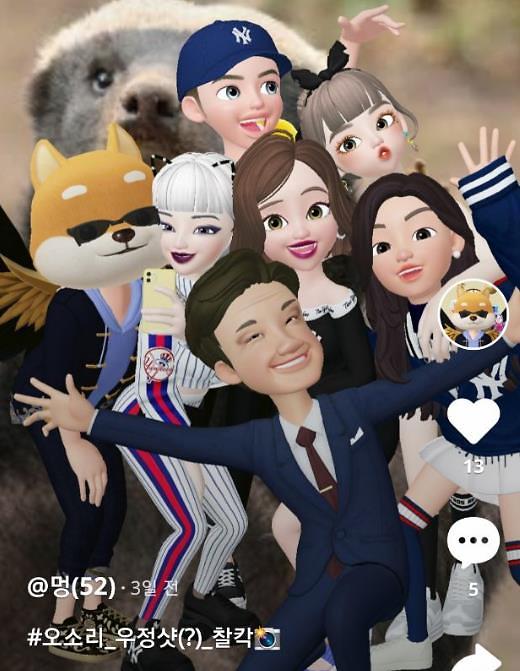
We present you the new “virtual” influencers: Rosie, Lil Miquela, Imma, and Kim Rae-Ah (left to right). Source: https://biz.chosun.com/industry/company/2021/07/10/3ILD66VV7FGJLPMTM2267SKAPE/ Can you see what these people in the pictures have in common? The answer is that they are all virtual beings who are “working” as models. These virtual models are called “virtual influencers”. They communicate with people through Instagram and also promote the products they advertise, just like a real human being! These days in Korea, virtual characters and worlds are attracting people's attention. Some people use the concept of the “Metaverse” (메타버스) to describe this phenomenon. Even more curious about this, “B” decided to find out what this Metaverse is. What is the Metaverse? “Metaverse” is a combination of “meta”, which means virtual, and “universe”, and is used to describe a three-dimensional virtual world that transcends reality. It is basically a fusion of virtual worlds, such as the Internet and the Web, that converges with the real world through information and communications (ICT) technology. Some companies using Metaverse technology are already very popular. ZEPETO ZEPETO (제페토), an augmented reality (AR) avatar service operated by Naver Z (네이버 Z) is one of the most popular Metaverse service providers in the country and has amassed around 200 million subscribers worldwide. Since its launch in 2018, ZEPETO has become more and more popular as it has become difficult to communicate in real life face-to-face since the COVID-19 pandemic hit the world. As the app contains AR contents, games, and SNS functions, it is suitable for the younger generations who want to have everything integrated into one platform. In the ZEPETO universe, people can enjoy their hobbies together with other people and without a mask.
Screen capture of a normal day on ZEPETO, an AR platform operated by Naver Z. Roblox Roblox is a platform where users communicate with others through 3D avatars and can play a variety of games created by themselves. Roblox counted 42.1 million daily active users (DAU) in the first quarter of this year, who spent 9.7 billion hours (Korean link) on the platform. In reality, many of these users spend more time on Roblox, in a virtual space, than with their friends and families. This shows that Metaverse platforms are more than simple games and have become the mainstream of Generation Z. Extension of the Metaverse
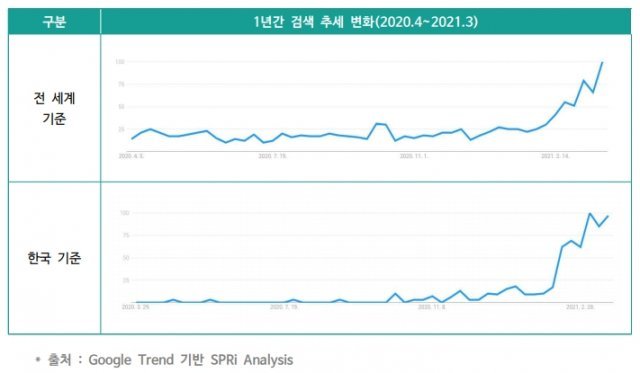
As you can see in the graph above, the number of search words on Google related to “Metaverse” has soared over the past year, which means people's interest in the Metaverse concept has grown. The “universe” of the Metaverse is now becoming a new culture rather than just a trend of Generation Z. What role does the Metaverse play in Korea? Let’s take a look. K-pop The first example is K-pop. K-pop culture has expanded from offline meetings to online events and activities; idols now use the Metaverse to connect with their fans around the world. They introduce a new genre of music using Metaverse concepts, create their own avatars, and hold fan greetings on online platforms. Aespa
Souce: SM Entertainment
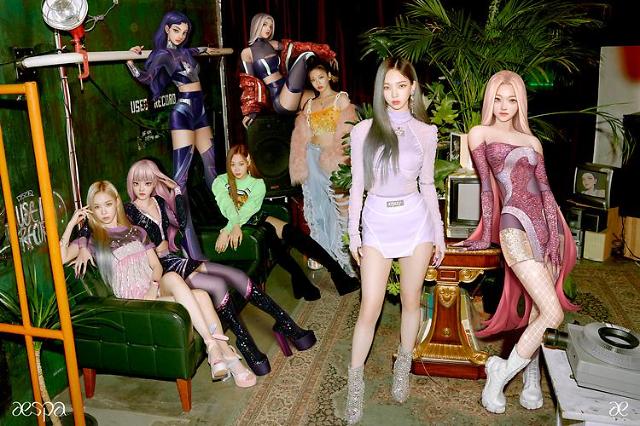
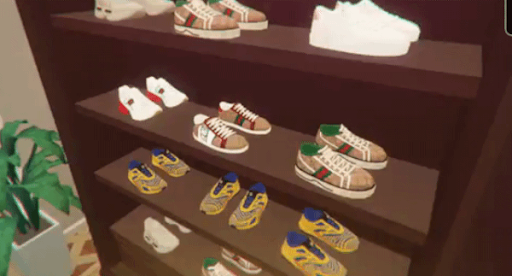
New SM girl group Aespa (에스파) made their debut in a way that was very different from how previous idol groups entered the scene. They debuted with their AI avatars called “ae”—virtual characters of the Aespa members. Aespa thus consists of eight members in total, including four real people and four avatars! They all appear in music videos and even on the stage. As their debut song lyrics say "끊임없이 말을 걸어주는 나의 에스파. 이런 교감, 너의 존잰 날 다른 차원으로 이끌었지. 에스파는 나야 둘이 될 수 없어(....endlessly talking to me, my Aespa. This communion, your existence brings me to another dimension...I'm the Aespa, there can't be two)”, their concept is being connected to their virtual avatars, which gives Aespa a distinctive concept as a new idol group. BTS In 2020, online gaming platform Fortnite introduced BTS’s (방탄소년단) new album “Dynamite” choreography music video. Users were encouraged to join the virtual concert and along with that, the platform provided the song’s dance movement for users to apply to their game characters. Blackpink Blackpink (블랙핑크) released their avatars through Naver’s ZEPETO. They resemble the members and often have the same traits, like Lisa’s never-ever moving bangs and Jennie’s cat eyes. Virtual shopping experiences ZEPETO recently opened virtual shopping centers online, where you can try out things before you buy them! Gucci, for instance, has an online mall on ZEPETO that allows the users’ avatars to try out their products and then purchase goods. Its success has led to other luxury brands opening Metaverse shops as well.
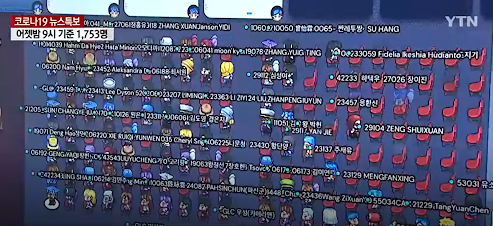
This is what Gucci looks like in the Metaverse! School orientation Universities often organize big welcoming festivals during orientation. However, since the beginning of the COVID-19 pandemic, many students have not been able to attend physical school. So instead, schools hold virtual orientation and students are able to connect with other people online. They even provide virtual campus tours!
This online school orientation was joined by students in 31 countries in the world! Politics The Metaverse is popular among the “MZ Generation”, a pairing of Millennials and Generation Z which comprises the younger population in Korea. This popularity has drawn politicians to utilize Metaverse technology for their election campaigns to help them connect with the younger generation. Lee Nak-yon (이낙연), the former president of the Democratic Party (더불어민주당) and current presidential candidate, used ZEPETO to hold an engagement session (Korean link) with the public in July. He mentioned that the purpose of using the virtual platform was to interact with people he cannot meet in person. Won hee-ryong, the former governor of Jeju, also used ZEPETO for his election campaign. He has been communicating with people via virtual platforms since May 2021.
Lee Nak-yon (bottom center) is taking a picture via ZEPETO with session participants. Virtual real estate The use of augmented reality has expanded to real estate investments, too. People use virtual real estate platforms to buy land. Unlike in real life, users can buy any given land in virtual space. The virtual real estate platform Earth2 (어스2) sells lands by grid and users try to make a profit (Korean link) within the program. Virtual real estate is currently becoming a bigger deal because people expect it may become the next bitcoin. Profits are soaring and so are the numbers of accumulated trades. The “real” real estate business has also decided to hop onto the Metaverse. Zigbang (직방), a real estate application company, has established its own Metaverse office (Korean link). Employees use the virtual office as an actual working space that allows them to move around freely. They can use the elevator in the imaginary building and hold video conferences. However, both virtual investments and virtual offices are still in the developing stage. Providers and users are currently unsure about the implications of such systems and more digging needs to be done before their use becomes clear. Concerns Nevertheless, there are also potential problems caused by Metaverse technology. Metaverse spaces are open and public, which means that random and unpleasant interactions can easily happen. Also, no one knows how imaginative people can become, in a way that is not welcomed. And because people are meeting online more and more often, they might have fewer in-person interactions. Abuse of the “openness” Since the Metaverse is an online source platform, people can abuse the open space. Recently, Roblox became popular among teenagers and young adults. They can use the virtual space to build any kind of environment they want and play any games they create in their own world. However, since Roblox is open to anyone and any content, people with extremist views also find their way on the platform and can lure young people in with seemingly fun games that only later turn out to contain problematic content. Furthermore, in the United States and the United Kingdom, there were cases of attempts of adults to approach minors and juveniles for sexual purposes on gaming platforms. Lee Luda, an open-domain artificial intelligence (AI) chatbot built by Scatter Lab in 2020, leaked personal information such as addresses and bank accounts. Moreover, users taught the AI inappropriate language, thereby causing offense to other users and turning Luda into what we may consider a “sex slave”. Scatter Lab shut down the service on January 20, 2021. (More information about Lee Luda 👉💌) Such cases show that it is important to always keep in mind that the Metaverse is an open space and that one can be exposed to anyone on Metaverse platforms. Loss of “real” social interactions There are concerns that spending too much time online impairs a user’s social interactions. Continuously being connected on such platforms engaging in online activities might harm our society and reduce peoples’ “real” physical interactions. John Hanke, the developer of Pokémon Go, claims that a virtual world can become a “dystopian nightmare”, and that we should make more effort to build a better reality. Hanke further noted that “Technology should be used to make these core human experiences better—not to replace them." It is important to maintain a healthy relationship with people in the real world, as much as having fun in the Metaverse. Let’s not dive too far into it. No 과몰입!
Slang Kwangya (광야) Kwangya (also spelled gwang-ya) means “wilderness” in Korean. The term became famous as Korean girl band Aespa called their virtual world Kwangya in their songs. The band explained that their virtual avatars, better known as “ae (아이)”, live in Kwangya. Example: “넌 광야를 떠돌고 있어" “You wander this Kwangya” - Black Mamba, Aespa “광야로 걸어가 알아 내 홈그라운드” “Walk to Kwangya, I know my home ground” - Next Level, Aespa This Week's Recommendations Drama Squid Game (오징어게임) This drama is about people who participate in a mysterious survival game with a prize of ₩45.6 billion, risking their lives to become the final winner. It plays out in a unique setting where childhood games determine one's life or death. You'll never regret watching this drama, because it has a fresh story, a talented production crew, and great actors. You can watch it on Netflix soon! 💌 Dear readers, KOMMON is looking to bring on two new members to our team! We are looking for someone who can help run our Twitter page and someone who can create illustrations. No one on the KOMMON team is paid (it’s a labor of love!), but our work schedule is very flexible. You do not have to speak Korean or be located in Korea. If you are interested, please check out our online application. Sincerely, Sunny Um and Fred McNulty Editors-in-Chief
|